
The Anatomy of the Outage
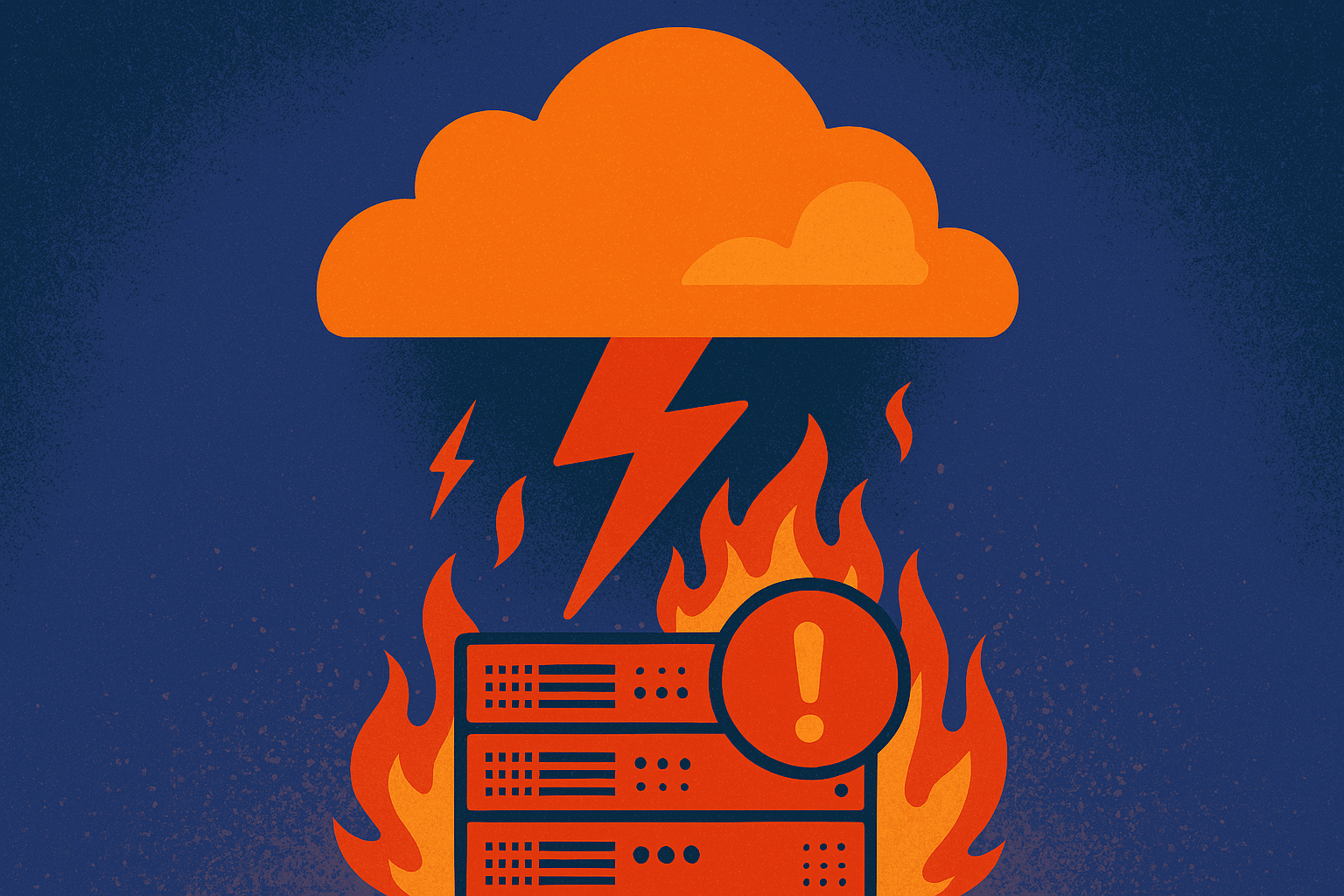
The Cloudflare outage began with an internal configuration change applied to its backbone network. This update, intended as part of routine maintenance, introduced a misconfiguration that disrupted routing protocols—particularly Border Gateway Protocol (BGP) announcements. As a result, traffic failed to route correctly across multiple Cloudflare data centers, causing widespread service interruptions.
Cloudflare served as a critical intermediary for millions of websites and applications, so the impact was immediate and global. Within minutes, major platforms relying on Cloudflare’s infrastructure experienced downtime. The issue continued until engineers identified the faulty configuration and executed a rollback, restoring normal operations.
Key Highlights
- Trigger: Routine backbone network configuration update
- Impact: Disrupted BGP routing and internal traffic flow
- Scope: Multiple data centers were affected, leading to global service outages
- Resolution: Engineers reverted the misconfiguration and stabilized the network
- Duration: Outage persisted until rollback and verification were completed
Root Cause Analysis
The outage stemmed from a configuration change applied to Cloudflare’s backbone network. This change introduced an error in routing logic, which affected how BGP announcements propagated across the infrastructure. As the misconfiguration took effect, traffic paths became unstable, and requests failed to reach their destinations.
The root cause lies in the complexity of backbone routing combined with the absence of automated safeguards for this specific update. While the change aimed to optimize network performance, it inadvertently altered critical parameters that controlled traffic distribution. These parameters governed multiple interconnected systems, and the error cascaded quickly, impacting data centers worldwide.
Key Highlights
- Primary Cause: Misconfigured backbone routing during maintenance updates
- Affected Component: BGP announcements and internal traffic routing
- Contributing Factors: Lack of automated validation for configuration changes
- Impact: Global service disruption due to cascading routing failures
- Resolution Path: Immediate rollback of the configuration and network stabilization
Impact on Global Internet Traffic
The outage immediately affected a vast portion of global internet traffic because Cloudflare operated as a critical content delivery and security layer for millions of websites. As routing instability spread, requests to Cloudflare-protected domains failed, resulting in widespread downtime for e-commerce platforms, SaaS applications, and media sites. End users experienced connection errors, slow page loads, and complete service unavailability.
Major regions across North America, Europe, and Asia reported disruptions within minutes. Monitoring dashboards showed a sharp decline in successful HTTP requests and a spike in error rates. The ripple effect extended beyond Cloudflare’s direct customers, impacting third-party services that depended on its infrastructure for DNS resolution and traffic optimization.
Key Highlights
- Scope: Millions of websites and applications experienced downtime
- Geographic Reach: Outage spanned multiple continents, including North America, Europe, and Asia
- Service Impact: E-commerce, SaaS, and media platforms reported severe disruptions
- Secondary Effects: DNS resolution failures and degraded performance for dependent services
- User Experience: Connection errors, latency spikes, and complete service outages
Lessons in Change Management
The outage underscored the critical importance of robust change management practices in large-scale network environments. Even routine updates could introduce significant risk when they affected core routing systems. Cloudflare’s experience demonstrated that configuration changes required strict validation, automated safeguards, and comprehensive rollback strategies to prevent cascading failures.
Organizations that managed global infrastructure relied on processes that minimized human error and ensured operational resilience. Automated pre-deployment checks, staged rollouts, and real-time monitoring served as essential controls. Additionally, clear communication protocols and incident response played a vital role in reducing downtime when issues occurred.
Key Highlights
- Risk Awareness: Routine changes could have global consequences in distributed systems
- Validation: Automated checks and peer reviews helped prevent misconfigurations
- Rollback Strategy: Rapid reversal procedures limited outage duration
- Monitoring: Real-time alerts enabled quick detection and response
- Culture: Emphasizing accountability and continuous improvement strengthened reliability
Cloudflare’s Response and Recovery
As soon as the outage began, Cloudflare’s engineering and operations teams activated their incident response protocols. Monitoring systems detected abnormal routing behavior and escalated alerts to senior network engineers. The team quickly identified the configuration change as the source of the disruption and prioritized rollback procedures to restore stability.
Engineers reverted to the misconfigured settings and validated routing tables across affected data centers. During this process, Cloudflare communicated transparently with customers through its status page and social channels, providing real-time updates on progress. Once the rollback was complete, the team performed post-recovery checks to ensure traffic flowed normally and no residual issues remained. Finally, Cloudflare launched an internal review to strengthen safeguards and prevent similar incidents in the future.
Key Highlights
- Immediate Action: Incident response protocols activated within minutes
- Root Identification: Monitoring tools pinpointed the configuration error
- Rollback Execution: Engineers reverted the changes and stabilized routing
- Customer Communication: Status updates-maintained transparency throughout
- Post-Recovery Measures: Validation checks and internal review followed restoration
Preventing Future Misconfigurations
Cloudflare’s outage highlighted the need for proactive measures to prevent similar incidents. Organizations that manage critical infrastructure implement layered safeguards to reduce risk. Automated configuration validation, staged deployments, and real-time anomaly detection served as essential defenses against human error. These practices ensured that changes were tested in controlled environments before reaching production.
Continuous improvement also played a key role. Post-incident reviews informed updates to change management policies, while investment in automation reduced reliance on manual processes. By combining technical controls with a culture of accountability, organizations strengthened resilience and maintained trust in their services.
Key Highlights
- Automation: Pre-deployment validation and anomaly detection reduced risk
- Staged Rollouts: Gradual implementation limited the blast radius of errors
- Monitoring: Real-time alerts enabled rapid response to unexpected behavior
- Policy Updates: Lessons learned informed stronger change management frameworks
- Culture: Emphasizing reliability and transparency built long-term trust